
A Japan–US Dialogue on Creation, Investment, and Fandom
This is an English translation of an article originally published in Japanese by Rolling Stone Japan: "世界的ヒットのコードを解く 創作、投資、ファンダムをめぐる日米対話" (September 18, 2026), by Shiho Watanabe. Translation provided by Copetin.
See the original: rollingstonejapan.com/articles/detail/45163
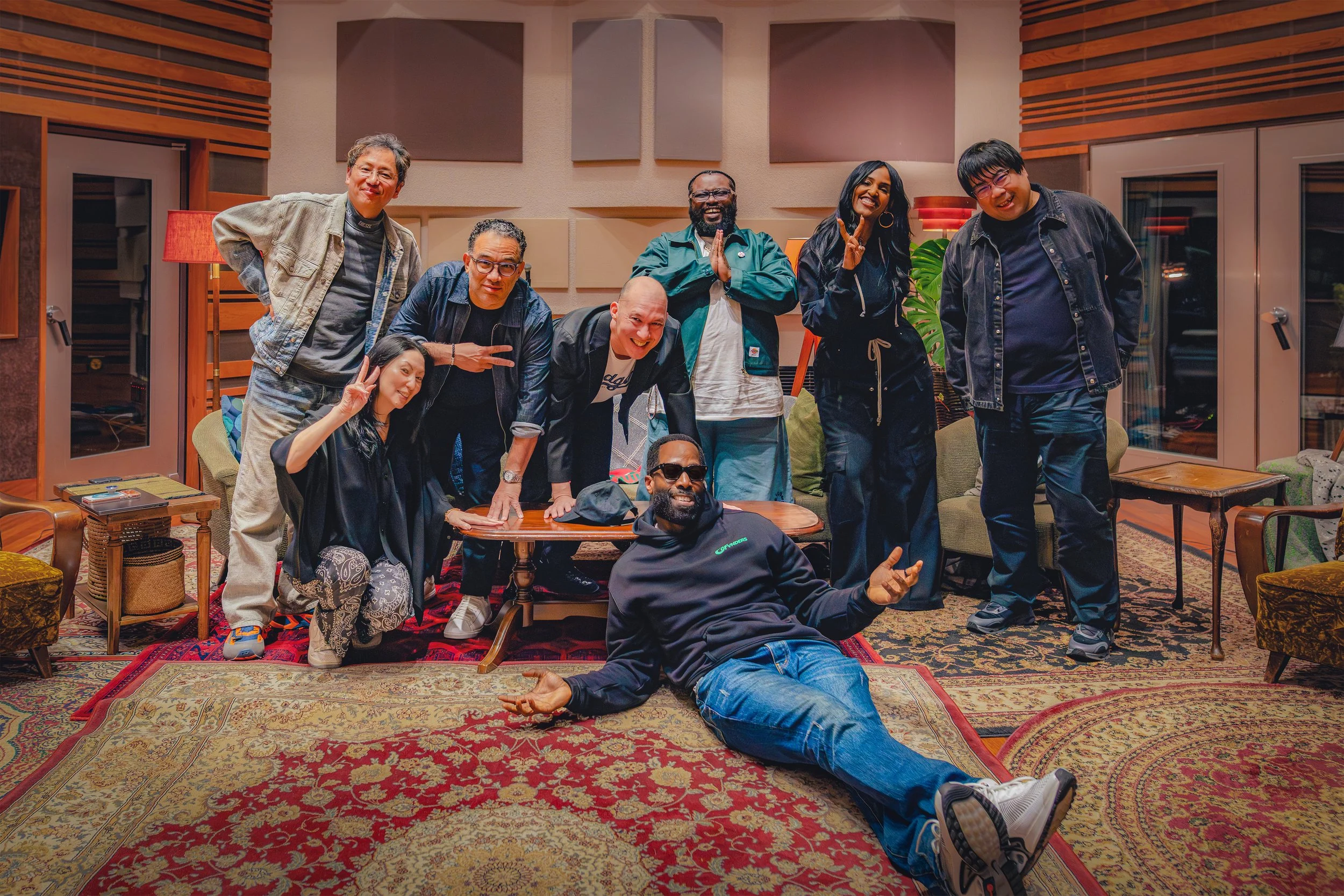
Roundtable participants, from left: Naoki Shimizu, Tamayu Takayama, Rodney Shealey, Tony Elison, Mark Pitts, James Fauntleroy, Ethiopia Habtemariam, and Yusuke Nakagawa.
In March 2026, TOKYO SOUND CONTINUUM — a songwriting camp that brought together top creators and executives from the U.S. music industry — was held in Tokyo. Supported by a grant from the Culture and Arts Activity Infrastructure Strengthening Fund (Creator Support Fund), established at the Japan Arts Council under a subsidy from the Agency for Cultural Affairs, the project was also joined by HarbourView Equity Partners, a global investment firm that invests in intellectual property (IP) across entertainment, sports, and media and holds one of the world's leading music catalogs.
Together, the project set out to translate Japan's distinctive aesthetics, narratives, and sensibilities into the universal language of song and carry them to the world — and, rather than a one-off camp, to build a Japan-born international creative ecosystem that supports artists end to end, from production through contracts, release, and overseas expansion. HarbourView's partnership helped bring world-class songwriters to Japan, connecting international creative talent with the project's broader ambition.
To that end, the overseas guests didn't just hole up in the studio; they also experienced Japanese culture such as the tea ceremony and ikebana, for a fully immersive experience.
This article reports on a roundtable featuring Tamayu Takayama — one of the organizers, who has long served as a bridge between Japan and overseas markets, from booking SUMMER SONIC to leading the U.S. expansion of ATARASHII GAKKO! and Gen Hoshino’s international collaborations — together with the executives and creators who traveled to Japan: Mark Pitts (President, RCA Records / CEO, COFVNDERS), Rodney Shealey (EVP, Urban Promotion, Def Jam Recordings), Ethiopia Habtemariam (President of Music, HYBE AMERICA / former Chair & CEO, Motown Records), and producer-songwriter James Fauntleroy, who has written for Lady Gaga, Bruno Mars, Kendrick Lamar, and many more — joined, from Japan, by Naoki Shimizu (President, Creativeman Productions), Tony Elison (CEO, Spotify Japan), and Yusuke Nakagawa (CEO, ASOBISYSTEM). A list of the producers and songwriters who took part in the project appears at the end.
The theme of the project was “Cracking the Code.” To crack the “code” needed to succeed globally, the participants spent the week of the camp in the studio alongside Japanese artists. Looking back, Tamayu reflects: “This became a meaningful first step toward building an environment where Japanese creators can take part naturally as members of the global creative community, and it laid the groundwork for ongoing communication.” What follows is a bird’s-eye view of the Japanese and global music markets — and a set of valuable perspectives on raising the game at ground level.
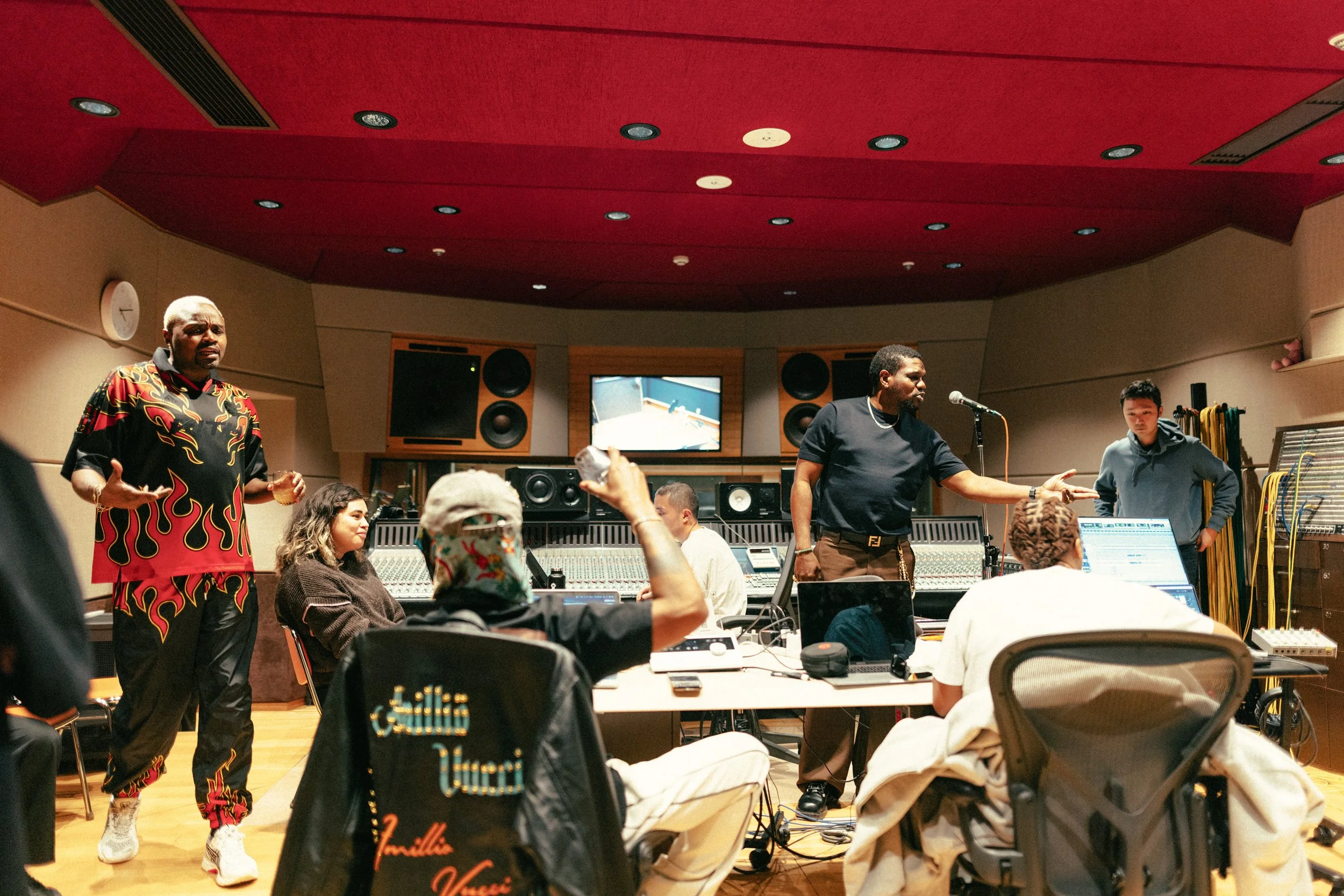
Producers and songwriters at the songwriting camp.
Where Cultures Meet: Inside the Creative Process
Tamayu: While we were making music together during your stay, I’d love to hear what you learned from the Japanese creators. You surely ran into language and cultural barriers — how did it actually feel to experience that firsthand?
Mark Pitts: There was a huge amount to learn. First, I want to say that the way Japanese people carry themselves — the discipline, the manners, the dedication — is genuinely wonderful. But when you’re making music, you have to bounce off each other, and a dynamic energy has to emerge in the room. So the challenge I felt was how to work with that uniquely Japanese respect for elders and the reluctance to say what’s really on your mind. Because first and foremost, I want to feel the artist’s energy.
Tamayu: Japan has a culture of “shame” and hierarchy, and I do think it’s hard for people to open up and put their thoughts into words. But to make anything cross over, you first have to build trust and friendship. Great music doesn’t suddenly appear between people meeting for the first time. In the U.S. industry, producers, songwriters, managers, and label people socialize all the time, and new work and new opportunities are born out of those connections.
The “Energy” Shared Beyond Words
Mark: What I really re-learned this time is that energy has no language. While we were working on one song, everyone locked into the same beat and vibed on the same energy. We couldn’t understand each other’s words, but we could feel what everyone was riding on. That, to me, is the essence of music. When you hear Michael Jackson sing “Mama-say, mama-sa, ma-ma-ko-ssa” (in “Wanna Be Startin’ Somethin’”), honestly you have no idea what he’s saying — but you get the feeling. When everyone’s moving inside the same energy, there’s definitely something there. So even with shy Japanese artists, I want to keep trying, and by the end of the camp I could feel it starting to click.
Tamayu: Conversely, do you think Japanese artists need to shift their mindset a bit — put out more energy, be more interactive? To really communicate the will to go for it?
Rodney Sealey: I think that takes time. Take Bad Bunny, or any American artist with hits — there’s an energy you can feel even without knowing the words. Saying music is a universal language may sound cliché, but I believe it’s true. What matters is whether each artist can adapt to the “room” they’re put in. You don’t have to stop being yourself; it’s about reading the room when you walk in and going, “with this person, I’ll respond like this,” matching that feel.
Tamayu: My challenge is to make Japanese music a bigger presence in the world — to create hits nobody can deny, and to leave a footprint for Japan. Basically, I want to do in music what Shohei Ohtani is doing for Japan. During the camp, James broke the method down into four steps for us. First, you need rhythm, because rhythm is universal. As Mark said, even if you don’t get Michael Jackson’s “Mama-say,” the rhythm still lands. Second is identity — that person’s singular, powerful presence. Lady Gaga, Rihanna, Beyoncé each have a one-of-a-kind presence. Third is understanding your audience and message. In Japan it’s easy to deliver a message aimed at Japanese people, but when you’re facing the U.S. or the world, you have to convert that message — and that’s not mere translation, it’s about feeling. And the last step is the biggest challenge: money.
Naoki Shimizu: Cultures like anime and food have been embraced worldwide without changing their form. Can music cross over the same way, as-is? Or does it need to be adapted to global audiences’ tastes?
The Structure Behind Global Hits: Creation and Investment
James Fauntleroy: I’m an anime fan, and I think the reason anime connects worldwide is that it’s made in Japan but not closed off to Japan alone. Take NARUTO — it’s valuable to viewers and, at the same time, a promotion of Japanese culture. The move names and character names carry traditional Japanese elements, and there are lots of references to Shinto and the Edo period. I’ve honestly learned a ton about Japanese culture through NARUTO and other anime. The fact that everyone responds to Japanese culture is the proof. But what these anime examples have in common is that huge money is put into them. It’s the same with Korea’s BTS — the first time I saw BTS was at the Grammys. They were seated way up front, and those seats are extremely expensive. At the time nobody was really talking about them yet, but they were sitting there as a whole team. Just the tickets and travel to the U.S. probably cost around $100,000. Anime is the same: a serious production runs about $1 million per episode. For the Demon Slayer film, there were ads at bus stops and malls all over Los Angeles — which means, on top of the film budget, there was a proper marketing budget. With BTS, between the Grammy stage, the promo videos, and the radio-promotion budget, I’m sure they spent an enormous amount.
Tony Elison: I don’t think there’s any problem with the quality of Japanese music. There’s a wealth of great music here that simply hasn’t found its fandom overseas yet, and it’s incredibly diverse. In Spotify numbers, the global perception is that if K-pop is 100, J-pop is about 10. But the reality is different. The ratio of Japan-origin music streamed outside Japan to Korea-origin music streamed outside Japan is roughly 2 to 1 — Korea is only double Japan. What Japan lacks, unlike K-pop, is superstars. And Japanese music is highly fragmented, with tons of small niches. It’s like dining out in Tokyo: in L.A. or New York you want to go to the new place everyone’s going to, but in Tokyo there’s value in the secret spot only you know about. Music is the same — each artist has a small, specific audience. But the big difference is that Japanese music hasn’t been marketed enough toward the global market. How to build an artist’s profile globally is something the whole industry is still developing. Korea started 20 years earlier, using government money to send artists abroad, seat them at the Grammys, put them to work with world-class songwriters, and build online identities. In Japan, that kind of effort is still to come. This isn’t a talent or content problem — it’s a marketing and promotion challenge.
Tamayu: Which is also a money problem, right? Even if you want to make a crossover track for overseas, the budget might be $10,000 for the track and $30,000–40,000 for a remix. And once the song exists, you need money for marketing too.
Tony: Across the Japanese music industry as a whole, I think there’s still room to grow in how platforms like Spotify are used. There are mechanisms like Discovery Mode — a promotional tool that makes it easier for a track to get surfaced in Spotify’s personalized recommendations — as well as options for labels, management, or artists themselves to run ads and boost plays. But there’s a lot more room to make use of these tools.
Rodney: I come from a promotion background and worked radio for years. One artist I used to handle was Alessia Cara. We actually took her song to Urban radio first, because it was obvious that if we took it to Top 40 we’d be waiting a very long time. By going to Urban on purpose, we were able to spread the song’s popularity out to Rhythmic. If we’d stuck to the traditional route, moving that fast would’ve been hard. But even spending big money doesn’t always produce a hit — in the end you have to get as much exposure as possible and wait for a reaction. Radio doesn’t directly move streaming the way it used to, but it does affect global popularity. If a song gets radio play and lands on the Billboard chart, that becomes a spark for gaining global listeners. And the reason cultures like food get embraced abroad is that they’re authentic to those people. Music is the same: R&B and hip-hop are American culture and art. When you try to enter that from the outside, you can make your own version of something authentic, but it won’t be consumed the same way. What BTS did well was understand the pop formula, make Americanized songs, put up a budget, and truly go for it.
James: K-pop is originally built on the music we Black people grew up listening to. But within the Black community that became old and stopped being cool. These days there’s even a debate inside the Black community about how to support R&B and our own music.
The Dilemma of a Strong Home Market
Shimizu: In Japan, I think the biggest problem is the relationship between record companies and management. The other day I met a really great band and told them, “You could go global right now,” and they said, “We want to.” But when I said the same thing to management, they said, “No, they need more steps — they have to sell more records in Japan first.” So the label and management spend years working through the steps to sell domestically, and the band ends up missing its chance to go overseas. I think that dynamic is very real here.
Tamayu: In Japan, management companies often hold more power than labels.
Mark: Something I’ve always wondered: does an artist from another country really have to sign with a label in that country? A Japanese person living in America should be able to sign with a U.S. label, but they often seem bound to a Japanese label, and I feel like that limits their possibilities. Also, while I have the chance to ask — why are Japanese groups so big? So many members.
Tamayu: Japan still has a physical market. An 11-member group can make 11 different album covers, and that becomes a product aimed at the fandom.
James: In Japanese groups, everyone has a role — the shy one, the cute one, the half-Black one. The first time I came to Japan was to work with LDH. When I met LDH’s HIRO over ten years ago, I was genuinely stunned by the astronomical amount he was spending on the tour production. It was a scale I’d never even seen in America, and I thought there was so much to learn. Take the confetti that falls at the end of a show. In America, confetti is basically just trash. But in Japan there are names and messages printed on it, so it becomes a keepsake fans can take home. That kind of detail and intentionality is incredible.
Fandom: Japan's Weakness, or Its Asset?
Ethiopia Habtemariam: Exactly — it’s intentional. Korea’s government has poured big money into exporting music. Interest in Japan is rising now too, and lots of Americans are coming here. Tourism seems to be growing — but is the Japanese government making any moves to promote Japanese talent toward America?
Tamayu: Yes. Under the current Prime Minister there’s a national effort to support creators’ overseas expansion, and TOKYO SOUND CONTINUUM is part of that. Right now I think there’s a kind of hunger in Japan to go more global. And that can be an investment not only in music but in the whole creator economy — film, games, fashion, theater.
Ethiopia: Bringing America’s top songwriters to Japan was genuinely smart. Music starts with the making, and we got to see firsthand how they create, where young Japanese talent gets self-conscious, and how cultural differences play in. What we learned this time will absolutely pay off next time.

Tony: On the fandom point — ASOBISYSTEM is one of the best in the world at this. They may not have millions or tens of millions of Spotify listeners, but they can sell out a dome, because they build incredibly passionate, deep fans. I actually think Japan should be proud that CDs still sell here. The people buying CDs are also listening on streaming services. Fan clubs work the same way — Japan has systems where fans keep spending continuously. You don’t need five million Spotify listeners if you have 100,000 people who’ll come to the dome twice a year. Those people join the fan club, buy the CD, and spend again and again. The domestic market is big enough that the business works on that alone.
Tamayu: And fan-club fees aren’t cheap — sometimes around $100. Even so, fans join to become “part of something,” or to get priority on concert tickets. Someone I want to bring up here is Nakagawa. He’s the person who pushed “kawaii culture” to the world through Kyary Pamyu Pamyu. Kyary didn’t sing in English or remake herself for overseas; together with Harajuku creators, she broadcast “Harajuku” to the world exactly as it was, from her own place. Pharrell Williams and Virgil Abloh used to shop in Harajuku, after all. The reason I started working with ATARASHII GAKKO! was that I was drawn to that same distinctive appeal. Kyary and the girls both performed at Coachella while keeping their Japanese-language style — but only on the smaller stages. What I’m aiming for is to be a headliner on the main stage. How do Japanese artists get there? That’s something I’d love to think through together with all of us who know the American scene. And with that, let’s bring Nakagawa into the conversation.
Yusuke Nakagawa: Japan’s system is unique, and there are many ways the business comes together. In particular, there are lots of fans who spend ¥150,000 to ¥200,000 a month supporting an artist. Some fans buy hundreds of CDs on their own — a group like FRUITS ZIPPER can sell as many as 700,000 CDs. So the fandom is so strong that succeeding within Japan becomes what matters, and that creates a powerful pull not to go global. What I think, though, is that among Americans who love anime and games, there are definitely people who’d love Japanese music too. If we carry Japanese music over as one of those cultures, I think it can work worldwide. If we can get the world’s otaku to know it, we can reach the next step.
Anime and IP: Another Way Through
James: Japan also has a history — karate, Astro Boy — of exporting toys and culture after the war and building a business infrastructure with America. Korea’s cultural-export strategy surely learned from Japan’s success stories, and Japan has a cultural advantage. But Korea used Japan’s and America’s examples to build its own system. Even Purikura started in Japan, yet in L.A. you see the Korean-style photo booths more often. They pull in top-class executives and move to grow. HYBE and Avex can expand their business in America because the American record industry has gotten too comfortable resting on its catalog, leaving open the space to build the next big foundation.
Ethiopia: There’s so much America can learn from Japan’s fandom culture and the way it builds IP. America doesn’t really have that old-style fandom culture anymore. Music has become a passive experience now, and listeners’ attention is pulled to podcasts and the like. But the love and passion for music are still there. So, like Japan, I want to learn why fans engage so deeply and spend so much. On top of that, America’s big-name songwriters want into the K-pop and Japanese markets — because physical products still sell in Japan, and the mechanical royalties attached to them are high. Since I joined HYBE, songwriters and producers constantly ask me, “How do I get into this project?” There’s opportunity in a market where physical sells, and in America it’s become hard to build the point of sale itself. This writing camp was exactly an effort to build that bridge.
Rodney: In the end, fandom is everything — and America let that feeling go. That said, for Japanese music to enter the American market, you also need an environment where someone puts their arm around the artist and says, “I’m taking this person with me.” A hit song alone disappears once the song is over, so being embraced as part of a community is what matters.
Shimizu: If, say, HYBE developed a Japanese group and promoted it globally, do you think it would work?
Ethiopia: If the songs are good, they spend properly, and the artists themselves go to that market and put in the work, I think it would.
James: Besides Mariya Takeuchi’s “Plastic Love,” almost every Japanese song I know is an anime theme. The reason Jodeci’s “Freek’n You” went viral as the ending theme of JoJo’s Bizarre Adventure is that Japanese creators really understand pop culture. Megan Thee Stallion also drew huge attention by branding herself well as an anime fan. I got interested in her after seeing her dressed as Shoto Todoroki from My Hero Academia.
Tamayu: When she played SUMMER SONIC 2022, she came as Sailor Moon and twerked in that skirt (laughs).
Ethiopia: That’s really real — it means there’s an authentic, trusting relationship.
James: American stars aren’t moved by money alone anymore. What’s cool to them — anime, Japan itself — is the incentive. Being able to hear a Gen Hoshino song and recognize SPY×FAMILY, or sing an LDH song as the ONE PIECE theme — that kind of IP becomes a huge draw for pulling in major artists. Another important thing: most American decision-makers are white, and the metrics of success are based on white people’s response. But Japan has a strong connection to the Black community. Many of the biggest anime fans in America are Black, and everyone who came to this camp, including me, is Black. Japan already has an unspoken love (for Black culture). Walking the vintage shops in Tokyo, there are hip-hop stores everywhere. That’s a truly powerful tool.
Mark: A lot of people are focused only on breaking in America, but I feel the importance of bringing the world together more. Especially after coming to Japan this time, I’ve really come to want to make that happen. I’ve also started wanting to learn Japanese. I genuinely love the culture, the way respect is shown, and the craftsmanship, and I want to help this movement.
Tony: Bringing the market to Japan matters too. American executives used to not want to come to Japan, but that’s changed. When they actually come, they’re struck by Japan’s functionality, its courtesy, its seriousness about craft. First 300, then 1,000, then 2,000 — we can keep bringing people like that to Japan and let them take a little of what’s good about Japan home with them.
Mark: Getting curious like that is the real meaning of “Cracking the Code.” Raising stars in Japan while, at the same time, letting them be themselves — and I want to understand that. Again, my time in Japan was truly a joy.
Tamayu: What was truly important this time was creating an environment where the participants could genuinely collaborate — a space everyone could enjoy, where new encounters happen, where people can exchange opinions safely and come away thinking, “I want to create together again.” I feel that was my most important role. Before people want to make music together, they want to spend time together. My hope is that these connections grow, in the future, into not just globally viable music but a whole new creative ecosystem linking Japan and the world.
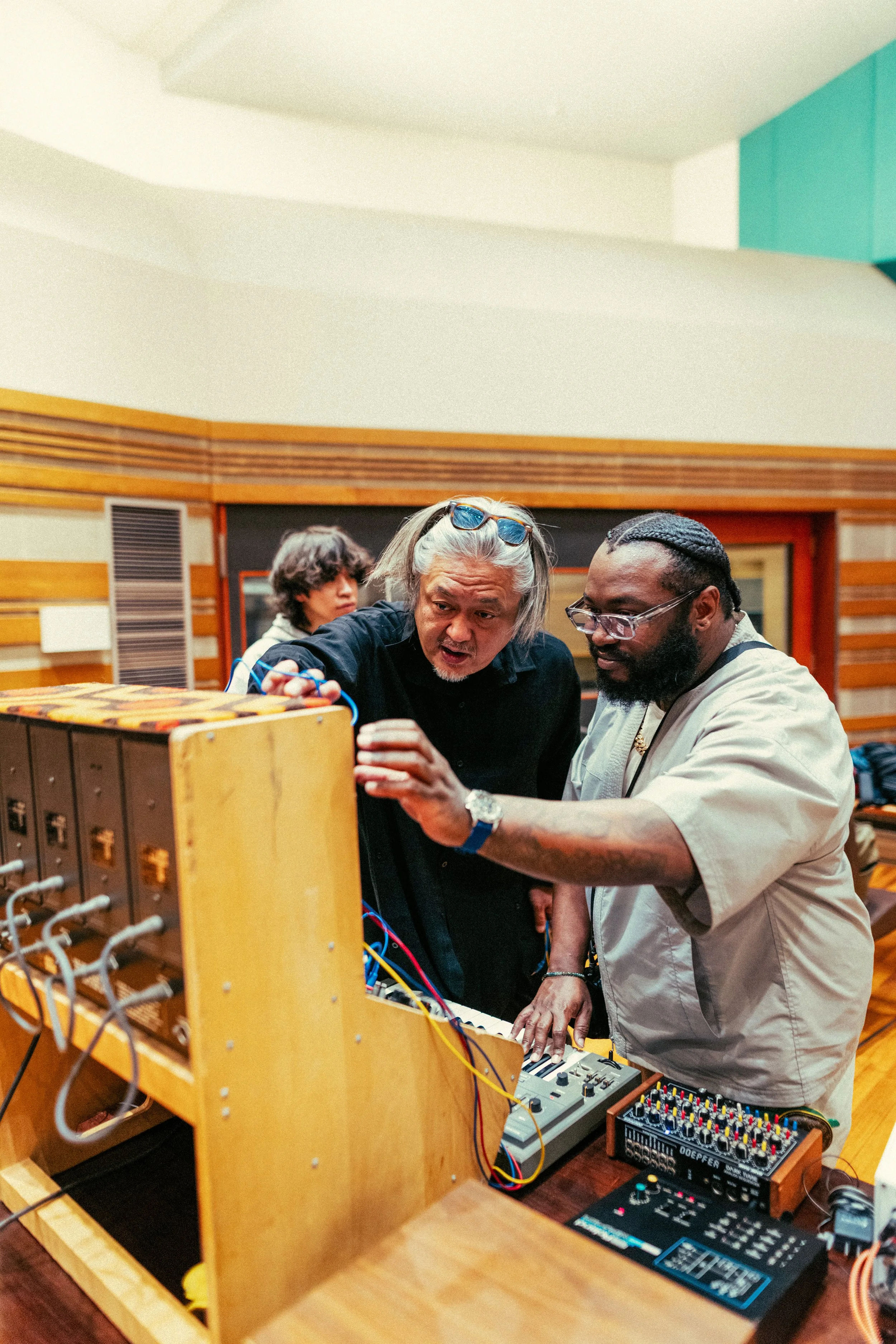
TOKYO SOUND CONTINUUM was made possible through the exceptional support of HarbourView Equity Partners. Welcoming some of the world’s leading songwriters to Japan — and drawing on a selection of tracks from HarbourView’s catalog as creative inspiration — was possible only through the firm’s generous partnership.
Organized by: Gradient Japan, Inc.
Special sponsor: HarbourView Equity Partners
Grant: Culture and Arts Activity Infrastructure Strengthening Fund (Creator Support Fund)
About HarbourView Equity Partners
HarbourView Equity Partners is an investment firm focused on opportunities to support content across the entertainment, sports, and media markets. The firm seeks businesses or assets powered by IP and investment opportunities that aim to build enduring asset value and returns. HarbourView has been extremely active since launching in 2021, amassing roughly $3.88 billion* in regulatory assets under management including over 70+ music catalogs to date and investments in various portfolio companies with management teams in its core industries. The firm's distinctly diverse music portfolio features thousands of titles spanning numerous genres, eras, and artists, amounting to a diversified catalog of ~41,000+ songs across both master recordings and publishing income streams. The company is headquartered in Newark, NJ.
*Regulatory AUM for private funds are calculated regardless of the nature of the gross assets under management as of 12/31/2025. This includes any uncalled committed capital pursuant to an obligation to make a capital contribution to the fund. Title count may include multiple versions of the same song, such as covers, remixes, remasters and/or minor differences in naming conventions.
WHO’S WHO — The Hitmakers Who Cracked the Code in Tokyo
The songwriters and producers who came together for Tokyo Sound Continuum aren’t background names — they’re the hands behind a decade of global No. 1s. A quick guide to who was in the room. Producers are listed alphabetically by professional name; Japanese artists follow.
Bangladesh (Shondrae Crawford)
The Des Moines-raised, Atlanta-based super-producer who reset hip-hop’s rhythm section. Grammy-winning architect of Lil Wayne’s “A Milli” and “6 Foot 7 Foot,” Nicki Minaj’s “Did It On ’Em,” Kelis’s “Bossy,” and Gucci Mane’s “Lemonade” — plus work with Beyoncé, Usher, and Rihanna.
James Fauntleroy
The Inglewood songwriter’s songwriter, and a Grammy winner many times over. Co-wrote Bruno Mars’ “That’s What I Like,” Lady Gaga & Bruno Mars’ “Die With a Smile,” and Justin Timberlake’s “Mirrors,” with a catalog running deep through Beyoncé, Rihanna, Kendrick Lamar, and Frank Ocean.
Ink (Atia Boggs)
A Grammy-winning writer as comfortable in country as in R&B. Credits span Beyoncé’s Renaissance and the Album of the Year Cowboy Carter — including “Texas Hold ’Em” — alongside Kendrick Lamar, Justin Bieber, and Jennifer Lopez.
J.LBS (Jason Pounds)
LA-based producer, songwriter, and multi-instrumentalist under the Roc Nation banner. Contributed to Kendrick Lamar’s Grammy-winning Mr. Morale & The Big Steppers, and has worked alongside Dr. Dre and Anderson .Paak, bringing live musicianship into modern rap.
J White Did It
The producer who built some of the decade’s biggest rap records: Cardi B’s “Bodak Yellow” and “I Like It,” Megan Thee Stallion’s “Savage (Remix),” and 21 Savage’s “A Lot,” a Grammy winner for Best Rap Song. Also in with Bad Bunny and J Balvin.
Theron Thomas (R. City)
St. Thomas–born, one half of the duo R. City, and the reigning Grammy Songwriter of the Year, Non-Classical (2024). His pen is everywhere you’ve been lately: Jung Kook’s “Seven,” ROSÉ & Bruno Mars’ “APT.,” Lizzo’s “About Damn Time,” Miley Cyrus’s “We Can’t Stop,” and R. City’s own “Locked Away.”
WorldWideFresh (Akil King)
Brooklyn songwriter mentored by Scott Storch. A Grammy winner for Beyoncé’s “Black Parade,” and the co-writer of Coi Leray’s breakout “Players,” with a reach that stretches from R&B into K-pop and Latin (Bad Gyal).
Koshy
The Tokyo producer behind both of 2024’s landmark Japan-crossover hits: Yuki Chiba’s “Team Tomodachi” and Megan Thee Stallion’s “Mamushi” (feat. Yuki Chiba). The bilingual “Mamushi” went viral on TikTok, topped Billboard’s US World Digital Song Sales chart, and was even performed at a 2024 U.S. presidential campaign rally. He fully produced Chiba’s album, and his spare, piano-driven trap — simple but impossible to shake — is already being copied across the scene.
Kanata Okajima
One of Asia’s most prolific hitmakers, she is a two-time Japan Record Award–winning songwriter, topliner, and vocal producer, with 190 No. 1 releases in Japan to her name. She co-wrote BTS’s “Crystal Snow” and BABYMETAL’s “DA DA DANCE,” featured on METAL GALAXY, the first Japanese album to top Billboard’s Rock Albums chart. Her catalog spans J-pop and K-pop stars including aespa, LE SSERAFIM, TXT, TWICE, Ado, and Snow Man, as well as international artists across dance, pop, and Latin music, including Jax Jones, Becky Hill, and Pablo Alborán.
